
You take a sip of hot coffee and wince. You bite into ice cream and feel a sharp twinge. You brush your teeth and a sensitive spot makes you pull away.
That sudden jolt of pain when your tooth touches something hot, cold, sweet, or acidic is tooth sensitivity. And you’re not alone — nearly one in three adults experience it.
The frustrating part is that it feels like it comes out of nowhere. Your teeth were fine last month. Now even water can set them off.
Here’s the good news: tooth sensitivity usually has a fixable cause. And most of the time, it’s treatable at home. Sometimes you need a dentist. But either way, you don’t have to live with it.
In this guide, we’ll explain what’s actually happening inside your tooth, why sensitivity develops, what actually works to stop it, and when it’s time to call a professional.
What Is Tooth Sensitivity, Really?
Tooth sensitivity is pain or discomfort that comes from a specific tooth (or teeth) when exposed to hot, cold, sweet, acidic, or even cold air.
Here’s the anatomy behind it:
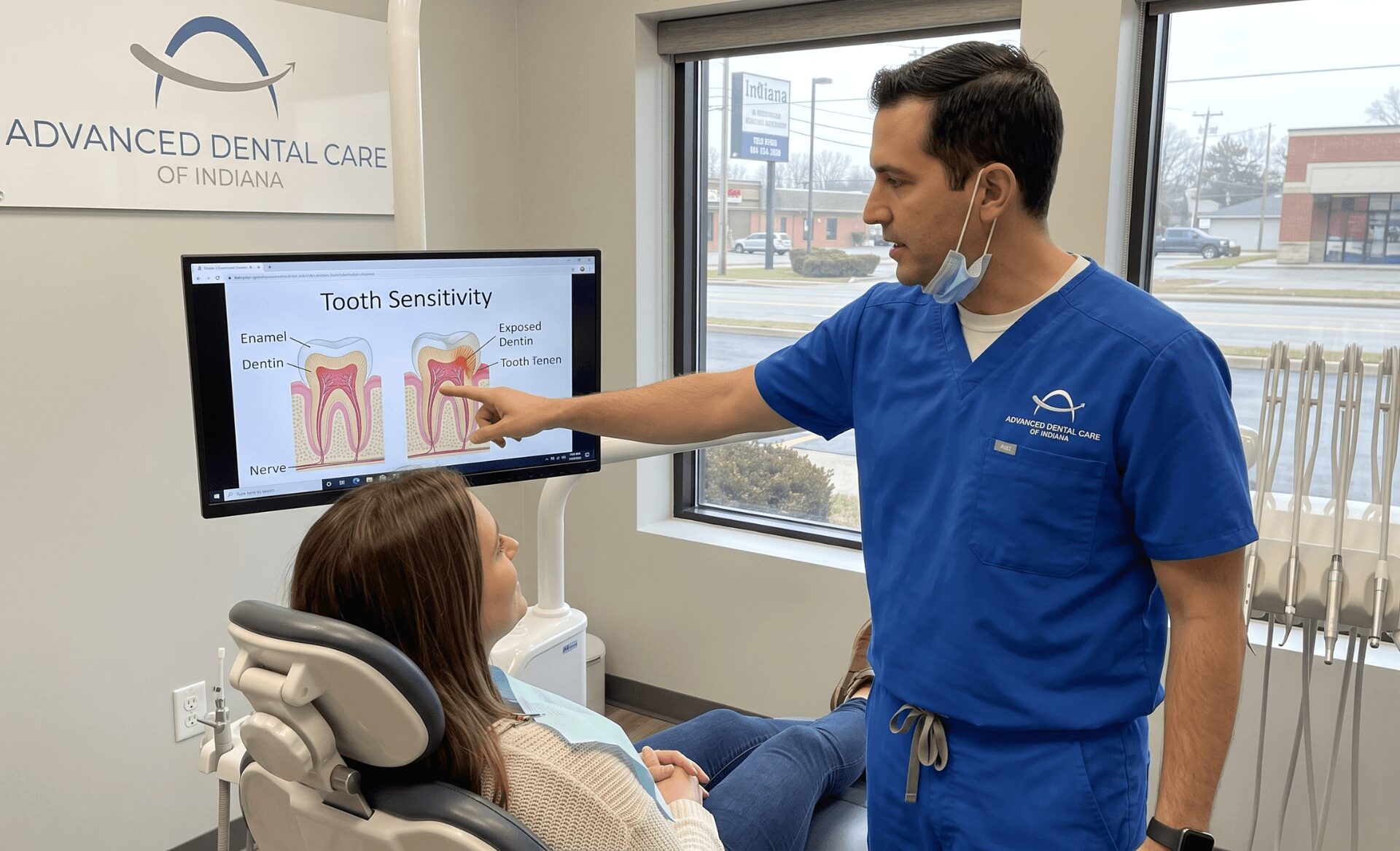
Your tooth has three layers. The enamel is the hard, white part you see. Underneath the enamel is the dentin — a softer layer that has tiny tunnels running through it that connect to the nerve in the center of the tooth.
When dentin is exposed to the outside world — because enamel has worn away or your gum has receded — the outside temperature, pressure, or acid travels through those tiny tunnels straight to the nerve.
That’s the sharp, sudden pain you feel. It’s not decay. It’s not an infection. It’s your nerve responding to exposure.

The technical term is dentin hypersensitivity, but “sensitive teeth” is accurate enough.
Why Your Teeth Became Sensitive (And When It Started)
Tooth sensitivity doesn’t happen without a reason. Something changed. Either your enamel wore down, or your gum receded, or both.
Common Cause #1: Aggressive Brushing or Hard Toothbrush
This is the one you can control immediately.
Brushing too hard or using a hard-bristled toothbrush wears away enamel over time and pushes your gum line down. Your dentist has probably said “gentle brushing” before — this is why.
The fix: Switch to a soft-bristled toothbrush. Brush with small, gentle circles instead of back-and-forth scrubbing. Let the toothbrush do the work, not your arm strength.
Common Cause #2: Acidic Foods and Drinks
Acid dissolves enamel. Cola, citrus juice, sports drinks, energy drinks, and even wine are highly acidic.
If you’re drinking them regularly or sipping them throughout the day, you’re bathing your teeth in acid. Enamel gets thinner. Dentin gets exposed. Sensitivity follows.
The fix: Limit acidic drinks. When you do have them, drink them quickly rather than sipping over time. Rinse your mouth with water afterward. Wait 20 minutes before brushing (brushing immediately after acid softens enamel and wears it away faster).

Common Cause #3: Teeth Grinding (Bruxism)
If you clench or grind your teeth at night, you’re putting extreme force on them. Over time, grinding wears down enamel and can fracture teeth.
The fix: Talk to your dentist. A night guard protects your teeth from grinding damage and often stops sensitivity within a few weeks.
Common Cause #4: Gum Recession
Your gum line naturally recedes slightly as you age, but aggressive brushing or gum disease speeds it up dramatically.
When your gum pulls back, the root of the tooth — which doesn’t have a protective enamel layer — becomes exposed. Roots are softer than enamel, so they’re more sensitive.
The fix: Stop the cause (usually aggressive brushing or untreated gum disease). Once the gum recedes, it usually doesn’t grow back, but you can protect the exposed root with fluoride gel or a gum graft in severe cases.
Common Cause #5: Teeth Whitening
Professional whitening — or aggressive over-the-counter whitening — can temporarily make teeth sensitive.
The bleaching agent penetrates the enamel and irritates the dentin underneath. For most people, the sensitivity is temporary (a few days to a few weeks). For some, it lasts longer.
The fix: Use a sensitivity toothpaste for two weeks before and after whitening. If you get professional whitening, ask your dentist about desensitizing treatments beforehand.
Common Cause #6: Cracked or Chipped Tooth
A crack or chip can expose the dentin layer. Unlike general sensitivity, a cracked tooth usually hurts worse when you bite down on that specific tooth.
The fix: See a dentist. Depending on the size and location, it might need a filling, bonding, or a crown.
Common Cause #7: Cavities or Decay Under an Old Filling
Decay exposes the dentin. An old filling that’s leaking or cracked also exposes the underlying tooth structure.
The fix: See a dentist for an exam. Cavities need to be cleaned out and filled.
Common Cause #8: Recent Dental Work
Root canals, crowns, fillings, and even professional cleanings can temporarily irritate the tooth and surrounding tissue. This sensitivity usually goes away within a few weeks.
The fix: Use fluoride rinse and sensitivity toothpaste. If sensitivity lasts beyond a few weeks, call your dentist to check the work.
What Actually Works (Ranked by Effectiveness)
1. Professional Fluoride Treatment (Strongest)
Your dentist can apply a high-strength fluoride gel or varnish directly to the sensitive area. It hardens over the dentin and blocks those tiny tunnels.
Results: Most people feel relief within a day or two. Effects can last months.
Cost: Usually $25–$100 per application, often covered by insurance.
When to get it: If sensitivity is affecting multiple teeth or home remedies aren’t working, this is worth doing.
🦷 Tooth sensitivity keeping you from enjoying food?
We can apply a professional fluoride treatment in one quick visit. Most people feel relief the same day. Schedule a sensitivity consultation →
Call (765) 622-7000 for Anderson, (317) 485-7000 for Fortville, (317) 926-5200 for Indianapolis, and (317) 984-3000 for Cicero Dental Clinic.
2. Sensitivity Toothpaste (Effective and Accessible)
Sensitivity toothpaste contains compounds (usually potassium nitrate or strontium chloride) that block sensation from traveling down those tunnels to the nerve.
Results: Takes 3–7 days of regular use. Works better the longer you use it.
Cost: $5–$12 per tube.
How to use it: Brush with it twice daily. Don’t rinse aggressively after brushing — let it sit on your teeth for a minute so it can absorb.
Honest take: It works, but it’s maintenance. If you stop using it, sensitivity usually comes back within days or weeks.
3. Fluoride Rinse (Good Preventive Support)
Fluoride rinse strengthens enamel and can reduce sensitivity when used regularly.
Results: Takes longer than toothpaste (1–2 weeks), but works as preventive maintenance.
Cost: $3–$8 per bottle.
How to use it: Rinse once daily, usually at night. Don’t rinse with water immediately after.
4. Gum Graft (For Severe Recession Only)
If your gum has receded significantly and exposed the root, a gum graft can cover the exposed area. This is surgical and usually only done for severe cases where the tooth is at risk.
Results: Very effective, but invasive.
Cost: $600–$2,000+ per tooth, usually not covered by insurance.
When to consider it: Only if recession is severe and sensitivity is extreme despite other treatments.
5. Root Canal (Last Resort)
If sensitivity is so severe that nothing else works and it’s affecting your quality of life, a root canal removes the nerve entirely. The tooth stops hurting because there’s no nerve left to feel pain.
Cost: $800–$1,500.
When to consider it: Only if the tooth is causing serious problems and all other options have been exhausted. This is the nuclear option.
What Doesn’t Work (Don’t Waste Your Money)
- Charcoal toothpaste: Abrasive and makes sensitivity worse
- Oil pulling: No scientific evidence
- Saltwater rinses: May help gum inflammation, but won’t fix sensitivity
- DIY whitening or bleaching: Often makes sensitivity worse
- Aspirin on the tooth: Just causes more pain
When to See a Dentist About Sensitivity
See a dentist if:
Sensitivity started suddenly. It might be a cracked tooth, cavity, or something else that needs professional evaluation.
It’s affecting just one tooth. Widespread sensitivity is usually dietary or hygiene-related. One-tooth sensitivity often means decay or a crack.
It’s getting worse, not better. Home remedies should help within a week or two. If it’s worsening, something else is going on.
It’s affecting your quality of life. You’re avoiding foods or drinks you enjoy. That’s worth a professional solution.
You have gum swelling or recession. This needs an exam to rule out gum disease.
It started after dental work. Usually temporary, but your dentist should check to make sure the work is correct.
Our Advanced Dental Care teams in Indianapolis, Fortville, Anderson, and Cicero can do a quick exam and often apply professional fluoride treatment the same day.
How to Prevent Sensitivity (Before It Starts)
Use a soft toothbrush. Seriously. This alone prevents most sensitivity.
Brush gently. Small circles, light pressure. Floss daily but don’t snap the floss — ease it gently between teeth.
Limit acidic drinks. Or drink them quickly, not sipped over time.
Wait before brushing after acidic foods. Brush after 20 minutes, not immediately.
If you grind your teeth, get a night guard. This prevents enamel wear and sensitivity before it starts.
See your dentist twice a year. Small problems stay small. You’ll catch early gum recession or decay before sensitivity develops.
Avoid aggressive whitening. Professional whitening is safer than DIY kits. And ask about desensitizing treatments beforehand if you have sensitive teeth.

Frequently Asked Questions
Yes, but be careful. Use professional whitening (safer than DIY) and ask your dentist about desensitizing treatment first. Sensitivity toothpaste before and after helps.
Sometimes. If sensitivity is from aggressive brushing, switching to a soft toothbrush might resolve it. But if it’s from gum recession or decay, it usually gets worse, not better.
No. A cavity is decay — a hole in the tooth that needs to be cleaned out and filled. Sensitivity is dentin exposure, usually from enamel wear or gum recession.
It manages sensitivity while you use it, but it doesn’t repair enamel or reverse gum recession. Once you stop, sensitivity usually returns.
Hot temperature travels through exposed dentin to the nerve. Cold has the same effect. It’s not the coffee itself — it’s the temperature.
Not always. Sensitivity can mean a cavity, but it can also mean gum recession, worn enamel, a crack, or even just aggressive brushing. Only an exam can tell for sure.
The Bottom Line
Tooth sensitivity is common, and it’s almost always fixable.
The cause is usually something you can control — brushing technique, acidic drinks, grinding, or a recent treatment. Once you identify the cause, the solution is usually straightforward: sensitivity toothpaste, professional fluoride, or a lifestyle change.
The one thing you shouldn’t do is ignore it or assume it’ll go away on its own. Sensitivity is your tooth’s way of signaling that something has changed. Addressing it now prevents worse problems later.
🦷 Tired of wincing every time you drink coffee or eat ice cream?
We’ll figure out what’s causing the sensitivity and give you a real solution — not just a temporary fix. Our teams in Indianapolis, Fortville, Anderson, and Cicero can apply professional fluoride treatment in one quick visit. Schedule your exam today →
Call (765) 622-7000 for Anderson, (317) 485-7000 for Fortville, (317) 926-5200 for Indianapolis, and (317) 984-3000 for Cicero Dental Clinic.